Peshawar Zalmi vs Karachi Kings, 32nd PSL 2026 T20: a fantasy read of the 22 April Lahore fixture
On the evening of 22 April 2026, the Pakistan Super League’s 32nd T20 brought Peshawar Zalmi — already the first franchise to seal a playoff spot — into Gaddafi Stadium against a Karachi Kings side on a four-match slide. This retrospective focuses on what the fixture offered fantasy readers at lock: the form contrast between the two sides, what the Lahore evening conditions have done to innings behaviour in PSL 2026, and where the captaincy and vice-captaincy picks actually pointed.
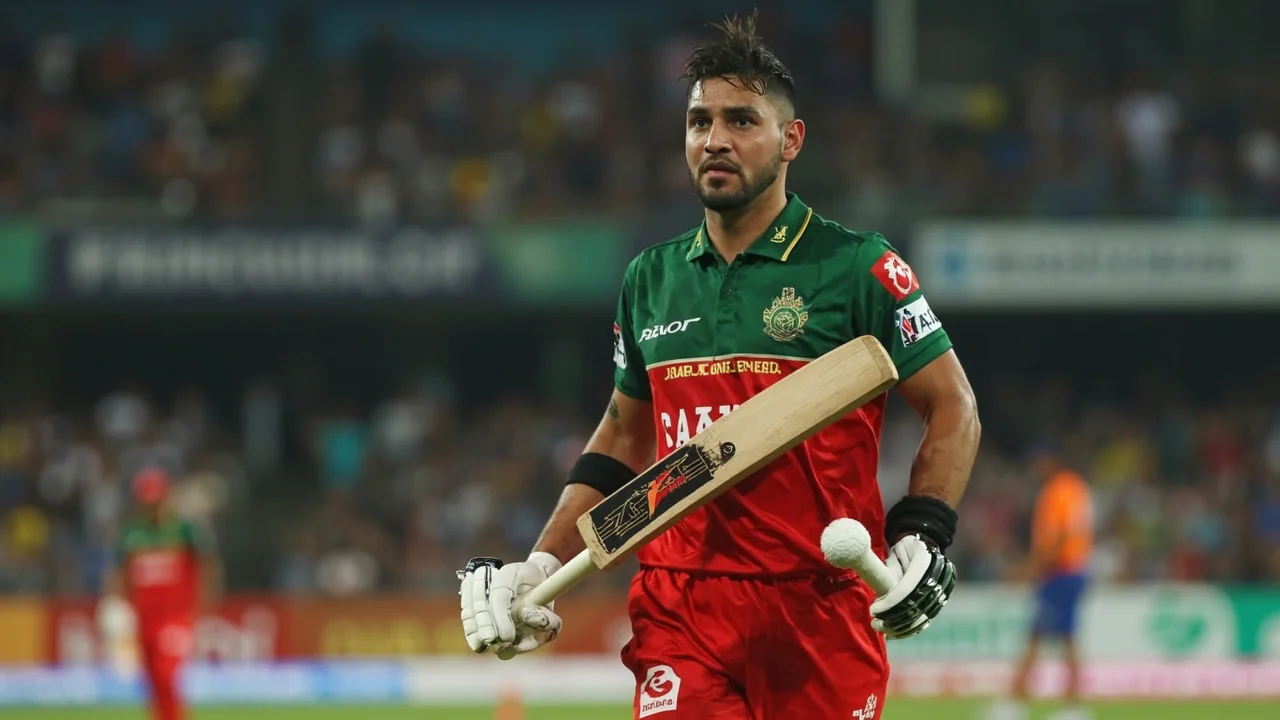
The 32nd T20 fixture, plainly set out
The 32nd T20 of PSL 2026 was scheduled for Wednesday, 22 April 2026 at 3:30 PM PKT, with the toss at 3:00 PM PKT. The venue was Gaddafi Stadium, Lahore, the in-tournament home of both finalists in this fixture. The toss window is a half-hour block, but the operational rule at this stage of the PSL is that squads are submitted and locks trigger immediately after the toss settles — any fantasy pick made before the toss has to survive a confirmed playing XI that often arrives inside ten minutes.
Digital broadcast rights for the evening sat with Fancode and TAPMAD inside Pakistan, with A Sports and regional broadcast partners sharing linear coverage in Pakistan and licensed feeds elsewhere. The way the platform mix falls matters for fantasy readers who rely on broadcast graphics to confirm late XI changes. TAPMAD’s stream tends to settle faster than broadcast relays, and Fancode’s overlay shows the playing XI within a tighter window than the linear feed.
Lock-window behaviour is a perennial theme across this PSL: the platform’s official deadline is the moment of toss confirmation, not the timed start. Reading the broadcast graphic rather than the platform clock is the safer move on a short-evening match where a delayed toss pulls everything forward by twelve to fifteen minutes.
Form lines: Zalmi rolling, Kings sliding
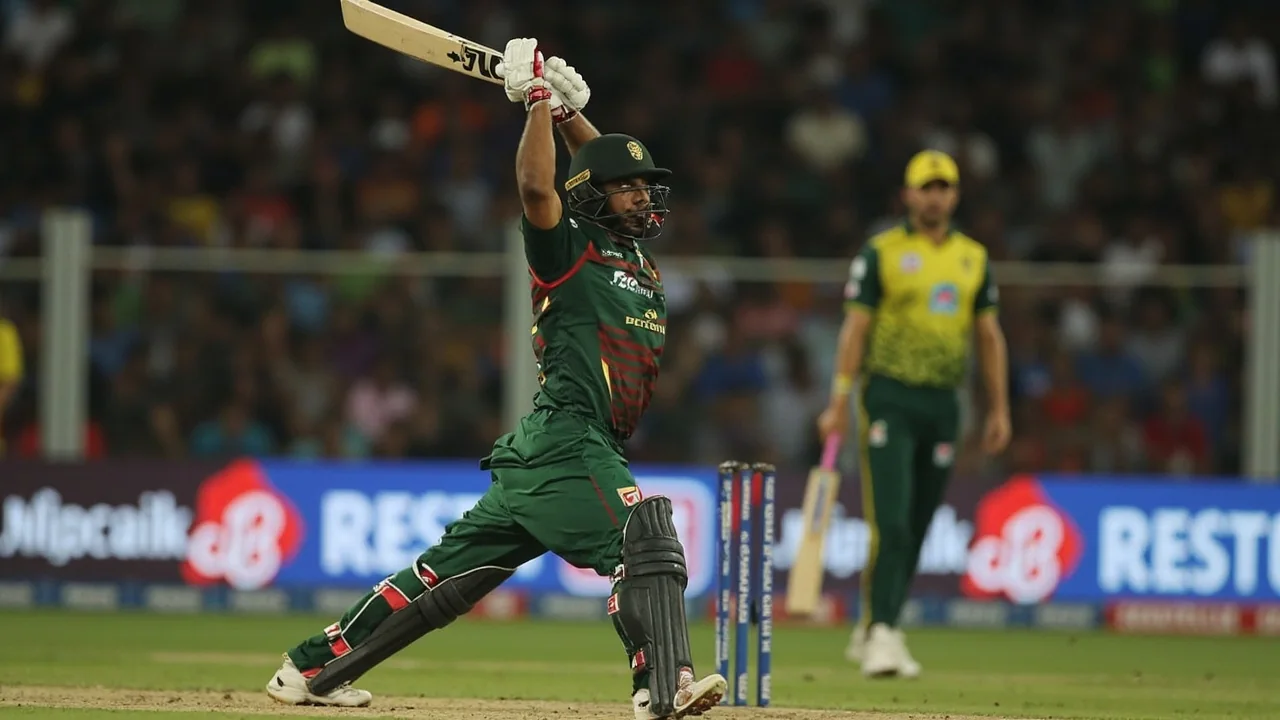
Peshawar Zalmi came into the 32nd fixture on a seven-win run from their first eight matches and had already become the first franchise to clinch a 2026 playoff spot. Kusal Mendis, the Sri Lankan anchor at the top of Zalmi’s order, was the competition’s leading run-scorer with 413 runs. Babar Azam had posted 71* and 101* in his two preceding innings — a small sample but a loud one when paired with the side’s qualifying position. The deeper bowling card — Sufyan Muqeem’s left-arm wrist-spin and Michael Bracewell’s off-spin control — had quietly logged middle-overs economy rates that are unusual on a subcontinental evening surface.
Karachi Kings arrived on the opposite curve. They sat seventh on the table with a four-match losing streak, missing marquee opener David Warner, and carrying their captain Moeen Ali through a phase in which partnership-building was the dominant struggle. Salman Agha had managed 86 runs in seven PSL 2026 innings at a strike rate that fans and the broadcast panel were openly flagging as the side’s chief scoring-blockage. Jason Roy had featured but had not converted starts into innings of match-winning weight.
Form differential in a T20 is rarely as wide as run-rate suggests. A four-match slide inside an under-strength Kings XI mostly narrows sample variance rather than erasing real skill gaps. What a long losing streak does is compress the captaincy mathematics — the captain loses one or two ceiling positions per match until the side finds a wicket-taking route back into the contest. Fantasy readers should weigh that ceiling loss into both the Khan XI’s captain pick and the differential-pick budget that sits behind it.
Gaddafi Stadium, Lahore — the dew ledger
Lahore in late April brings a predictable evening rhythm: hot afternoon, falling light, and a dew window that opens around the tenth over of the second innings. Across PSL 2026 matches at Gaddafi Stadium, the running first-innings average has sat near 170, with chasing sides winning a clear majority of the matches played under lights. The four-match swing Karachi Kings were carrying had not yet run into a subcontinental evening chase, but several of their away defeats on the calendar had come in conditions broadly similar to the one the 32nd fixture would deliver.
Dew influences two fantasy callings directly. First, it lifts the value of pace bowling up front — the ball holds its seam longer in dry heat and the early swing is reproducible through the powerplay. Second, it widens the variance on spin at the death because a wet ball grips less and slides less, both of which raise the economy ceiling on any spinner asked to bowl overs seventeen to twenty. For the 32nd fixture, that calculus argues for picking Zalmi’s seam options with the new ball and trusting Sufyan Muqeem’s overs in the middle block rather than at the death.
The boundary dimensions at Gaddafi Stadium tilt slightly square on both sides, favouring batters who work the ball behind square on the off-side. Run-scoring in the V has been a documented weak point for the side batting first in evening fixtures because the slower outfield at the straight boundaries slows twos and limits the boundary count. A fantasy reader expecting a high-scoring contest should treat that expectation as a soft claim, not a hard number.
Head-to-head: 16-8 in Zalmi’s favour
Across 24 PSL meetings between these two franchises, Peshawar Zalmi lead Karachi Kings 16-8. The standout recent result before the 32nd fixture was a 159-run Zalmi win earlier in April 2026 — the kind of margin that signals batting depth rather than one-man dominance, because Zalmi had spread the run-load across the order rather than riding a single innings. By contrast, Kings’ wins on their side of the ledger tended to ride on individual high-scores rather than collective batting depth.
Head-to-head at franchise level is a soft signal in T20 leagues because squads turn over quickly and the executive composition of a side that lost in 2019 rarely resembles the side meeting in 2026. The recent APL data, however, holds its weight. A 159-run win inside the same tournament window, on the same venue type, against the same opposition, is a clean read on what happens when Zalmi’s top three executes and Kings’ middle order does not.
Fantasy readers who treat head-to-head numbers as ground truth will under-price the four-match losing streak. Fantasy readers who ignore them will over-price a Zalmi captaincy pick after a quiet individual innings. The right operating position is to take the head-to-head as evidence of structural depth and use the form window as the tie-breaker when both signals point in the same direction, which they did going into the 32nd fixture.
Captain options and the form-led pick
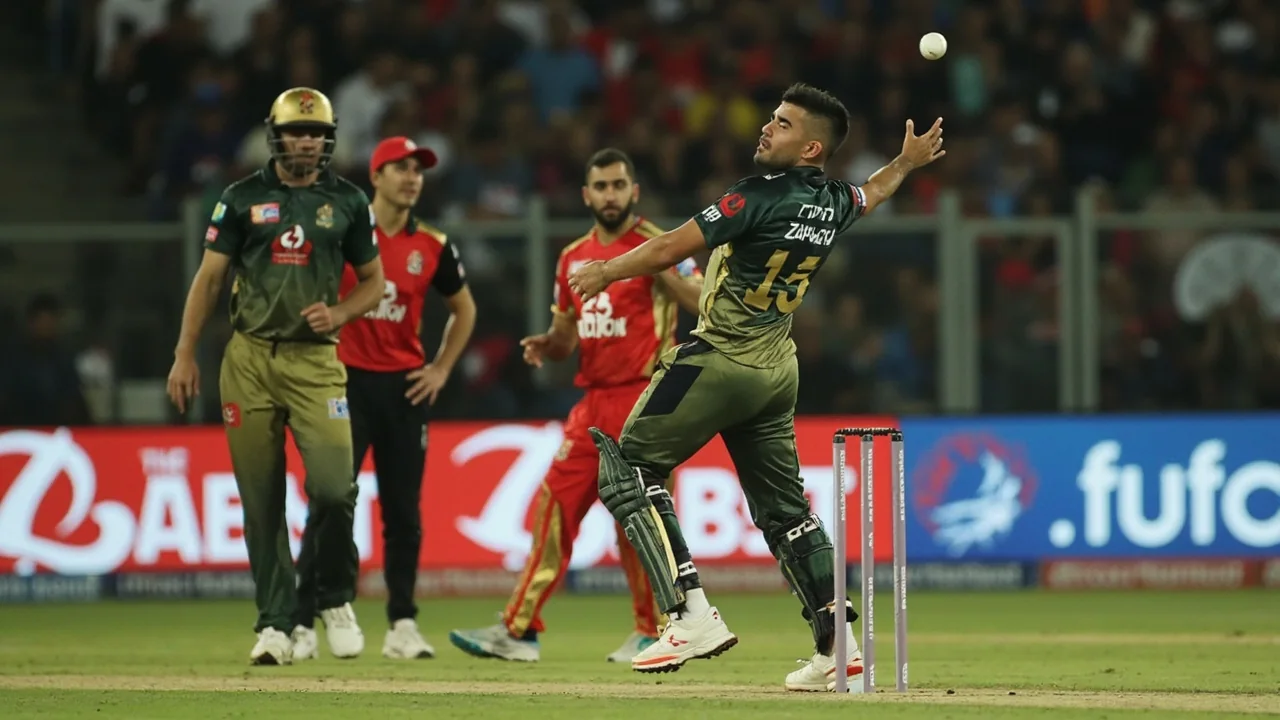
For fantasy readers, the captaincy decision on the 32nd fixture came down to a small slate of candidates rather than an open field. Babar Azam was the form-led pick on the strength of those back-to-back not-out innings and his familiarity with Lahore conditions. Kusal Mendis was the ceiling pick on the strength of his PSL 2026 run-tally, with the additional case that Mendis batting second gave him a dew-assisted outfield. Sufyan Muqeem was the differential captain candidate — a left-arm wrist spinner hunting wickets in the middle overs, with an economy that supported a multiplier if he picked up two or three.
The disciplined position was to captain Babar and vice-captain one of Mendis or Muqeem depending on the toss outcome. If Zalmi were inserted, Mendis’s ceiling went up because his powerplay overs would run before the dew window truly opened. If Zalmi were chasing, Muqeem’s wicket-taking role gained weight because he would be bowling in the middle block where his economy advantage is most pronounced.
On the Kings side, the captaincy math was much simpler: avoid captaincy on a top-order batter riding a four-match losing streak, and treat any Kings bowler as a vice-captain differential at best. Moeen Ali’s off-spin in the middle overs had a real case if conditions held — especially if the Kings lost the toss and were defending — but the ceiling was lower than any of the three Zalmi picks above.
Bowling shape: spin at the death, seam up top
Zalmi’s bowling shape in the run-up to this fixture built around seam up top and spin through the middle block. Ali Raza was the new-ball partner in the powerplay, hunting early wickets against an opposition missing David Warner at the top. Sufyan Muqeem’s overs came in the middle, with Michael Bracewell used as the holding off-spin option against left-hand batters in the middle of the Kings’ order. The death overs fell to a mix of pace and Bracewell, depending on the match-up.
On the Kings’ side, the bowling shape was less stable. Without a confirmed death-overs specialist in the wickets column, the side had cycled through different combinations across the four-match slide. The result was a captain trying different combinations at the death without finding a sustainable one, which compressed the side’s economy in the overs that matter most for fantasy points. Fantasy readers who picked Kings death-overs bowlers before this fixture should have had a low ceiling for the entire run.
The reading for any fantasy lock on the 32nd fixture therefore came down to two questions. First, which seam bowler is going to bowl the powerplay for Zalmi. Second, which spinner will bowl the 13th to 16th over for either side. Both questions are answerable in the broadcast’s playing-XI overlay once the toss settles; both should drive the captaincy and vice-captaincy decision once those names are visible.
Ones to watch on the Karachi side
Even against a strong Zalmi side, three Kings names had a credible case to watch. First, the new-ball seam option most likely to share the new ball with the captain — whoever carries that role has the cleanest path to two fantasy points from a wicket and a steady economy floor. Second, the wicketkeeper-batter who would bat in the top six and has historically been reliable on Lahore boundaries, because a four-match losing streak can mask a player whose role is still intact. Third, an off-spin or leg-spin option who would bowl in the middle overs where the dew window has not yet punished spin — the Kings have at least one name in that role whose economy is higher than the side’s overall rate.
What this slate of three names highlights is the structural importance of role continuity inside a losing streak. The Kings’ problem in PSL 2026 was not that any individual player had collapsed — Salman Agha and Jason Roy have had quiet tournaments, but neither has dropped out of the side. The problem has been that the role continuity has not translated into partnership continuity, which is the most basic ingredient of a competitive T20 innings.
Fantasy readers who picked a Kings captain in this fixture were betting on a tail-event outcome: a partnership-led Kings chase that turned a four-match slide into a one-off restart. That bet has historical precedent in T20 leagues, but the sample size required to call it a position rather than a coin flip is large. The disciplined line was a Kings vice-captain pick inside the multiplier and a zero captain spend on the Kings top order.
Toss math: chasing has been the call
The single most actionable bit of tactical context for the 32nd fixture is that chasing has been the right call at Gaddafi Stadium in PSL 2026. The first-innings average near 170, the dew-led outfield advantage in the second innings, and the absolute win-rate gap between sides batting first and sides batting second at the venue all point the same direction.
For fantasy readers, that direction matters most when the toss lands in Zalmi’s hands and the captain chooses to chase. A Zalmi chase means Mendis gets the powerplay with a dry ball and a tired outfield, while Muqeem bowls in the middle block with the dew window still open — exactly the conditions that built his economy advantage. A Kings chase, on the other hand, flattens both signals: a Kings captain chasing has the same dew advantage but lacks the top-order depth to convert it consistently.
Field-setting and captaincy choices aside, the practical fantasy rule on the 32nd fixture was to wait for the toss before locking in captaincy picks on any bowler. The difference between bowling in the eighth over of the first innings and the eighth over of the second innings at this venue in late April is large enough to flip a captaincy pick from a multiplier to a wash.
Pre-lock checklist before any 32nd-T20 fantasy entry
- Watch for the toss at 3:00 PM PKT. Lock triggers immediately after, not at the timed start. Plan to lock from the toss graphic, not the platform clock.
- Confirm the playing XI overlay from Fancode or TAPMAD rather than the linear broadcast, because the digital window shows late changes faster.
- Captains: prefer Zalmi’s form-led top order (Babar, Mendis). Avoid Kings top-order captaincy on a four-match slide.
- Vice-captains: Muqeem if Zalmi are chasing; Mendis if Zalmi are inserted; a Kings spinner on a defending innings if you want a high-variance differential.
- Bowling picks: lock in the Zalmi new-ball seam option first, then the middle-overs spinner for either side. Skip both Kings’ death-overs specialists.
- Wicketkeeper pick: prefer the Kings top-six keeper over the Zalmi keeper on the strength of role continuity inside a losing side.
- Set a hard entertainment budget before lock. A short-evening fixture can pull extra entries out of readers; cap the entries, not the picks.
- Re-rank after the toss. The toss outcome changes both captaincy and bowling-pick math more than form or reputation in this fixture.
None of these moves guarantees a result. PSL 2026 has been a tournament of tight margins and one-over swings, and the 32nd fixture fit that pattern going in. Reading the toss graphic first, captaincy second, and confirmation last is the cleanest discipline available on a fixture where form, venue and head-to-head all point in the same direction.
Where this sits in the wider PSL 2026 window
The 32nd fixture sat three matches from the end of the league phase. Zalmi’s playoff seal made the result academic for them in qualification terms, but the fixture still carried meaning: a win would lock Zalmi into one of the top two league positions and a likely double chance in the playoffs, while a loss could slide them into the third or fourth slot and a single-elimination first round. For Kings, the fixture sat on the wrong side of the qualification curve — a win would keep the side mathematically alive; a fifth straight loss would confirm the end of their 2026 campaign.
That context matters for fantasy readers who run longer-cycle portfolios across PSL match-windows. A franchise that has already qualified behaves differently on the field than a side that must win to survive. Rest policy, bowling workload, and field-setting aggression all change between the two states. Reading the league table before locking, not just the form window, is the cheapest insurance on a fixture of this kind.
The Fantasy Cricket News and Impact Desk keeps format announcements, role updates and squad revisions in one place, so a planner can refresh stage assumptions without rebuilding the entire research stack. For readers who already follow the PSL 2026 window, this fixture sat as one piece in a layered calendar rather than a standalone event. Treating it that way is what separates a portfolio-style reader from a one-match reader.
The next concrete checkpoint after this fixture was the playoff qualification table settling at the end of the league phase, with Zalmi’s exact seeding among the top two or three depending on the remaining fixtures. Until that table printed, fantasy readers should keep stage labels empty rather than guessed and track the lock-window discipline that this fixture demanded — that discipline carried forward to every match that followed.
A practical implication worth flagging: any reader who keeps a PSL-only side and is drafting for the playoffs rather than this single fixture should still re-rank after this match. Zalmi’s confirmed seed determines the opponent profile, and a one-line change in opposition has historically moved captaincy picks more than a player’s recent form. The 32nd fixture was therefore not a closing chapter — it was the last data point in the qualification ledger that any PSL portfolio should have on file.
For fantasy readers who follow a layered calendar across PSL 2026 match-windows, the longer research base sits inside the Fantasy Cricket Guides — one place to cross-reference role updates, captaincy takes and venue behaviour without rebuilding a draft from scratch.
Questions fantasy readers asked about the 32nd T20
When was the 32nd T20 of PSL 2026 between Peshawar Zalmi and Karachi Kings played?
The 32nd T20 was scheduled for Wednesday, 22 April 2026 at 3:30 PM PKT, with the toss at 3:00 PM PKT, at Gaddafi Stadium in Lahore. The toss window is the operational lock for any fantasy contest on the fixture.
Who was the form favourite going into the fixture?
Peshawar Zalmi were the form favourite, having won seven of their first eight matches and already sealed a 2026 playoff spot. Karachi Kings arrived on a four-match losing streak and sat seventh on the table.
How does the head-to-head record read between the two PSL sides?
Across 24 PSL meetings, Peshawar Zalmi lead Karachi Kings 16-8, including a 159-run Zalmi win earlier in April 2026.
What does the Gaddafi Stadium venue behaviour look like in PSL 2026?
Matches in PSL 2026 have favoured sides batting second because of dew in the Lahore evening, with a first-innings average of about 170 runs. Pace has been reliable up top, with spin dominant in the middle overs before dew.
Which bowler was leading the PSL 2026 wicket charts before this fixture?
Left-arm wrist spinner Sufyan Muqeem was the tournament’s leading wicket-taker with 17 wickets at an economy of 6.71, supported by Michael Bracewell’s off-spin control.
Where was the fixture available to watch?
The 22 April fixture was available digitally on Fancode and TAPMAD inside Pakistan, with linear coverage on A Sports and regional broadcast partners. Fantasy readers should rely on digital overlays for the fastest playing-XI confirmation.
Where can fantasy readers verify the next schedule against these two franchises?
Current match windows, squad updates and toss reactions are tracked in the Fantasy Cricket News and Impact Desk — a single source for staged fixtures, role changes and lock discipline ahead of any PSL 2026 entry.